Deep decay
When decay reaches the pulp of the tooth and infects it. Without treatment the inflammation spreads toward the root and the surrounding bone.
Modern root canal treatment (root canal therapy) to save inflamed and at-risk teeth — instead of pulling, we preserve your natural tooth and restore its function.
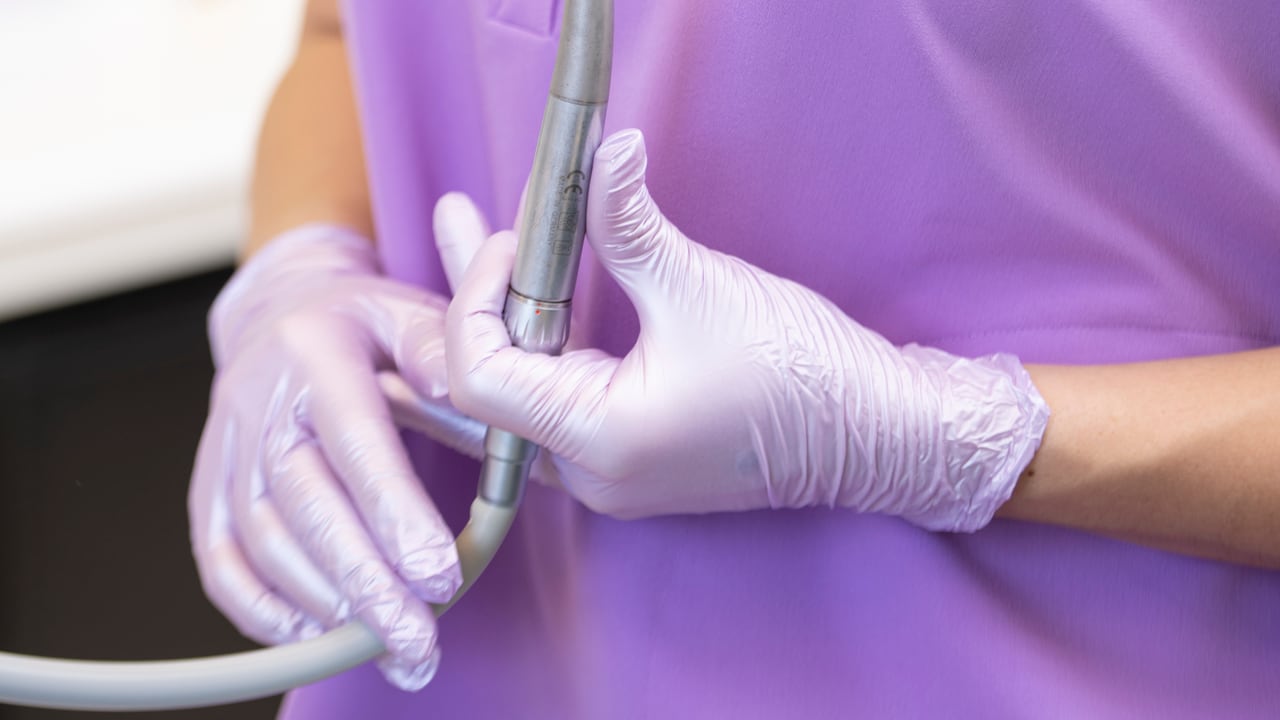
Root canal treatment (endodontics) is a procedure to save a tooth whose dental pulp (nerve) is inflamed or infected. Inside the tooth are root canals containing blood vessels and nerves — when these become inflamed, the procedure makes it possible to remove the infected pulp and seal the canals.
The main advantage: instead of pulling the tooth (extraction), we preserve your natural tooth. Modern techniques are significantly more comfortable and effective than in the past.
When decay reaches the pulp of the tooth and infects it. Without treatment the inflammation spreads toward the root and the surrounding bone.
Spontaneous pain, sensitivity to hot or cold lasting a long time, or pain on biting — all common symptoms of pulp inflammation.
After an injury (impact) the pulp can die even when the enamel is undamaged. Darkening of the tooth is a warning sign.
Inflammation that has progressed into a purulent focus near the root. Swelling, severe pain, possibly fever — emergency.
We examine the tooth, assess the symptoms and take an X-ray for an accurate diagnosis of the condition of the roots and the surrounding bone.
Under local anaesthesia we open access to the root canals through the crown of the tooth. The procedure is completely painless.
Using a modern mechanical root canal cleaning system and disinfectants we precisely clean and shape the root canals to their full length.
We seal the canals with a biocompatible material (gutta-percha). The tooth is then restored with a filling or crown to protect it from cracks.
The price of root canal treatment depends on the tooth and the number of root canals. You receive the exact price after an examination and diagnostics. The price list carries the prices of our other treatments.
Root canal treatment is needed when the dental pulp (nerve) becomes inflamed or infected due to deep decay, tooth injury or repeated dental procedures. Typical symptoms are pain, sensitivity to heat or cold, and swelling.
Modern root canal treatment is performed under local anaesthesia, so the procedure itself is painless. Mild transient sensitivity may occur after the procedure and can be managed with painkillers.
Usually 1 to 3 visits, depending on the number of canals in the tooth, the degree of inflammation and the complexity of the case. After the treatment is completed, the tooth is restored prosthetically (a crown or large filling).
The outcome depends on the individual case. What you can expect for your tooth is something we go through at the examination, with the X-ray.
The inflammation spreads into the surrounding bone and can cause an abscess, pain and tooth loss. In untreated cases the only alternative is extraction (pulling) of the tooth.
Aesthetic composite fillings to treat decay and restore teeth.
Crowns, bridges and dentures to restore function and smile aesthetics.
Replacing missing teeth with long-lasting dental implants.
Apicoectomies and other specialist procedures.
Choose a service, pick a time and book in a few steps.
Prefer phone? Call us: +386 70 260 430
Pick an available time in the form below
Loading the booking form …
Having trouble loading? Open form in a new window → or call us: +386 70 260 430
No waiting times Personal approach 5.0★ on Google
 Message us on WhatsApp